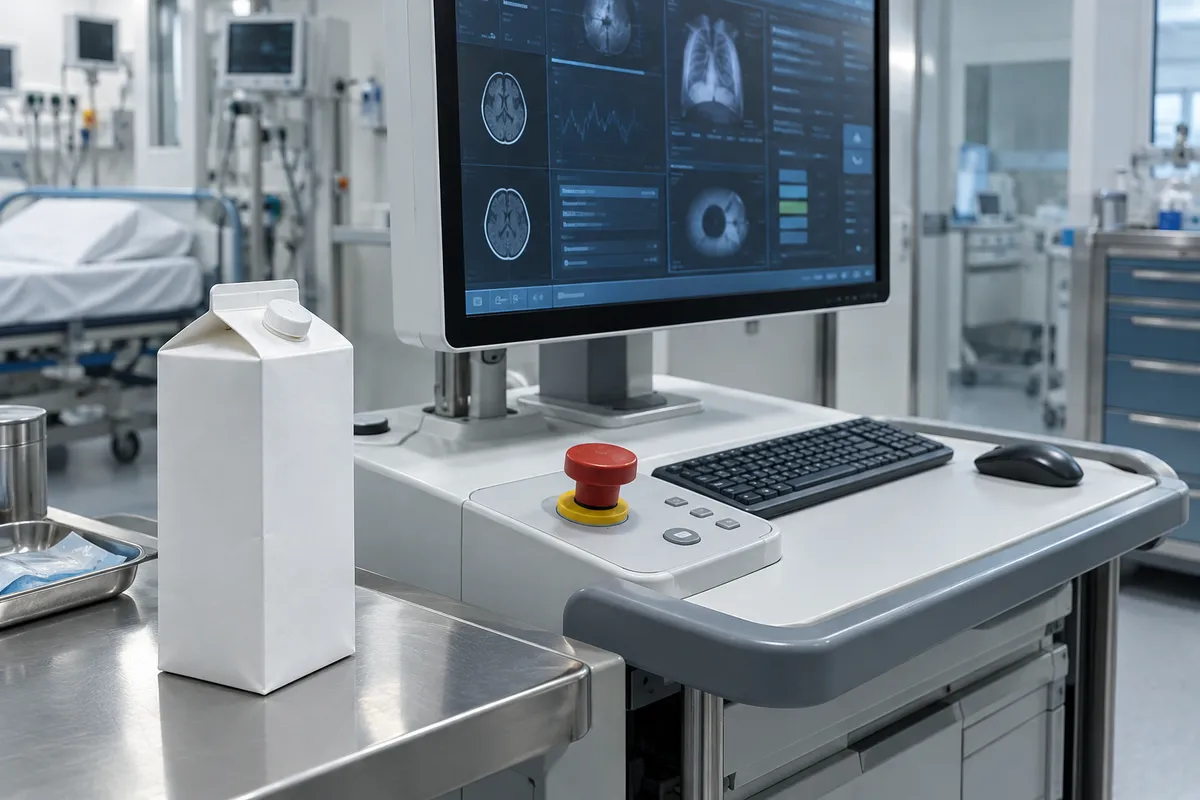
Microsoft president Brad Smith has a blunt comparison for the state of artificial intelligence oversight: AI is currently less regulated than everyday products like milk and washing machines. Speaking in comments reported by the BBC, Smith called for global safety rules, and said the UK is in the "best position" to lead the charge.
This is a technology story, but it lands squarely in health care. Hospitals, clinics and health apps are adopting AI tools at speed. By the end of this article, you'll know what Smith is asking for, why each proposal matters to patient care, and what questions you can ask when AI shows up in your own health journey.
A note on scope: the BBC report focuses on AI generally, not on medicine specifically. The health care connections below are my own analysis, and I'll flag them as such.
What Smith is actually asking for
Per the BBC, Smith's call includes four main ideas:
- Global safety rules for AI
- Incident reporting when things go wrong
- Kill switches for AI systems
- Independent evaluation before powerful systems are released
None of that is exotic. It's the kind of baseline we already expect from products that touch our daily lives. That's the heart of his milk-and-washing-machine point: those items face safety standards before they reach you, while powerful AI systems largely don't.
Why the milk comparison sticks
Milk and washing machines are boring on purpose. We trust them because testing, standards and consequences exist in the background, and most of us never think about it.
Health care runs on the same principle. Drugs go through trials before approval. Devices face review. When something goes wrong, there are reporting channels. Smith's argument, as reported, is that AI has skipped much of that scaffolding even as it grows more capable.
It's reasonable to ask (this is my take, not Smith's) whether an AI tool that summarizes your medical notes or flags a worrying scan should face at least the scrutiny we give a thermometer.
Four proposals, translated for patient care
Independent evaluation before release
This is the AI version of a clinical trial mindset: someone other than the maker checks that the system does what it claims. In health settings, that would mean outside testing before a tool influences decisions about people's care. The BBC reports Smith wants this for powerful systems before they're released.
Incident reporting
Medicine learns from adverse events because they get reported and studied. Incident reporting for AI would work on the same logic: if a system fails in a harmful way, the failure becomes shared knowledge rather than a private embarrassment. Without it, the same mistake can repeat in different places.
Kill switches, explained simply
A kill switch is a way to shut a system down if it misbehaves. Think of the emergency stop on gym equipment. It matters more as AI agents become more capable and potentially harder to control, which is the trend the BBC highlights. The idea is simple: if you can build it to act, you should be able to make it stop.
Global rules rather than patchwork
Health data and health tools cross borders constantly. A patchwork of national rules leaves gaps, which is part of why Smith is pushing for a global approach, according to the BBC.
Why the debate is heating up
The BBC frames Smith's comments against growing tension between AI safety advocates and political leaders such as Donald Trump, who favor faster, lighter-touch development in order to compete with China. The shift under way, per the report, is from voluntary pledges toward enforceable rules.
There's a fair counterargument here: heavy rules can slow useful tools, including ones that might help clinicians or patients. Smith's framing, though, isn't anti-innovation. Think seatbelts, not a speed limit of five miles per hour. Safety standards are often what let people trust a technology enough to use it widely.
The UK angle
Smith said the UK is in the "best position" to lead on global AI rules, per the BBC. The report report doesn't spell out why, so I won't guess at his reasoning. What it does show is that the question of who sets global standards is open, and that a country with a strong health system and research sector has a stake in the answer.
What you can do as a patient or caregiver
You don't need to wait for legislation to be an informed participant. A few practical questions:
- Ask whether AI is involved. If a clinic uses AI for note-taking, triage or image review, ask what it does and whether a clinician checks its output.
- Ask who evaluated it. A vendor's claim isn't the same as independent testing.
- Keep a human in the loop. Treat AI output as input for a conversation with your care team, not a verdict.
- Report problems. If a health app or tool gives you something clearly wrong, tell the provider or company. Incident reporting starts with someone speaking up.
- Be cautious with sensitive data. Check what an app does with your health information before you share it.
The takeaway
Smith's milk comparison is a useful gut check: we expect testing, reporting and an off switch from products far simpler than AI. The next time an AI tool touches your health care, ask who tested it and who can stop it. If nobody has a clear answer, that's the gap Smith is talking about.