
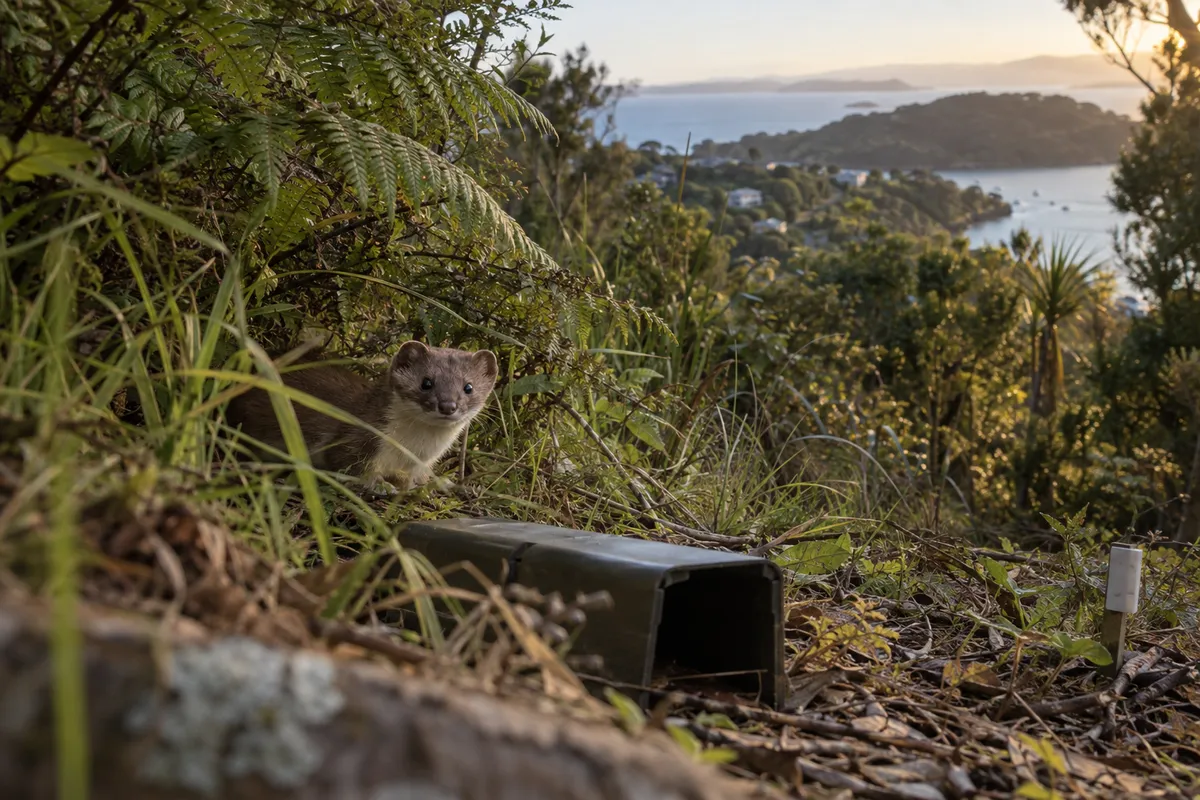
Waiheke Island, a popular tourist destination in New Zealand, is trying to become the first urban island to rid itself of stoats. By the end of this read, you'll understand why the last animals in an eradication effort are the hardest to catch, and what that means for conservation anywhere people live.
The story comes from The New York Times, which followed the effort to remove stoats, an introduced predator that has ravaged New Zealand's endemic wildlife.
Where the Effort Stands
Per the Times, more than 280 stoats have been trapped on Waiheke since 2020. That is a large number for one island, and it also tells you something. Early in a campaign, traps do much of the work because most animals are not especially wary. What remains after hundreds of captures is a different problem.
The Times describes the remaining animals as "shy" stoats: individuals that avoid the traps that caught their neighbors.
Why the Final Animals Are the Hardest
This is the core lesson of the story, and it applies well beyond stoats.
Easy catches come first
When an eradication begins, the bold and curious animals tend to get trapped first. As the population thins, the ones left are, almost by definition, harder to lure. Success itself raises the difficulty.
Detective work replaces routine
The Times frames the hunt as detective-like. Finding the last individuals is less about setting more traps and more about reading signs, tracking movements, and working out why an animal is avoiding what has worked on others. That is my read of the effort's character rather than a method-by-method account, but it explains why the final stretch demands different thinking than the first.
Every holdout matters
A predator that survives can keep killing native wildlife and, if breeding continues, rebuild the population. The goal here is zero, not "fewer," which is why a handful of elusive animals can decide whether the project succeeds.
Why Stoats Matter to New Zealand
Stoats were introduced to New Zealand and have devastated its endemic wildlife, per the Times. The broader context is that invasive predators continue to kill millions of native birds each year, and New Zealand is intensifying its predator-control efforts in response.
That scale is why a single island's campaign draws attention. Native birds evolved without these predators, and the losses add up across the country.
An Urban Island Is a Harder Test
Most eradication stories happen on remote, uninhabited islands. Waiheke is different: people live there and visitors arrive regularly. The Times highlights community support as part of the effort, which makes sense. In a populated place, success depends on residents who are willing to cooperate, not just on professionals with traps.
If Waiheke gets there, it would become the first urban island to eliminate stoats, and a high-profile test case for whether conservation can work in a populated tourist destination.
What You Can Take From It
There are a few practical lessons, whether you live near wildlife or just follow environmental news:
- Judge progress carefully. A big trapping total, like 280-plus, shows momentum. It doesn't mean the job is done. Eradication is measured by the last animal, not the running tally.
- Expect the last stretch to be slow. Setbacks near the finish line are normal in this kind of work, not necessarily signs of failure.
- Local buy-in counts. Where people live alongside the project, community support is part of the toolkit.
- If you're visiting, treat island conservation rules seriously. Tourist destinations that are trying to protect native species depend on visitors cooperating.
A Note on Health and Ecosystems
This is an ecology story rather than a clinical one, but it shares a logic with public health: eliminating a threat entirely is far harder than controlling it, and the final cases demand the most creative work. The comparison is mine, not the Times', yet it's a useful way to see why persistence matters.
The Takeaway
When you hear that a conservation project has removed hundreds of invasive animals, ask the better question: how hard is the last one to find? On Waiheke, that answer will decide whether an urban island can finally call itself stoat-free.