
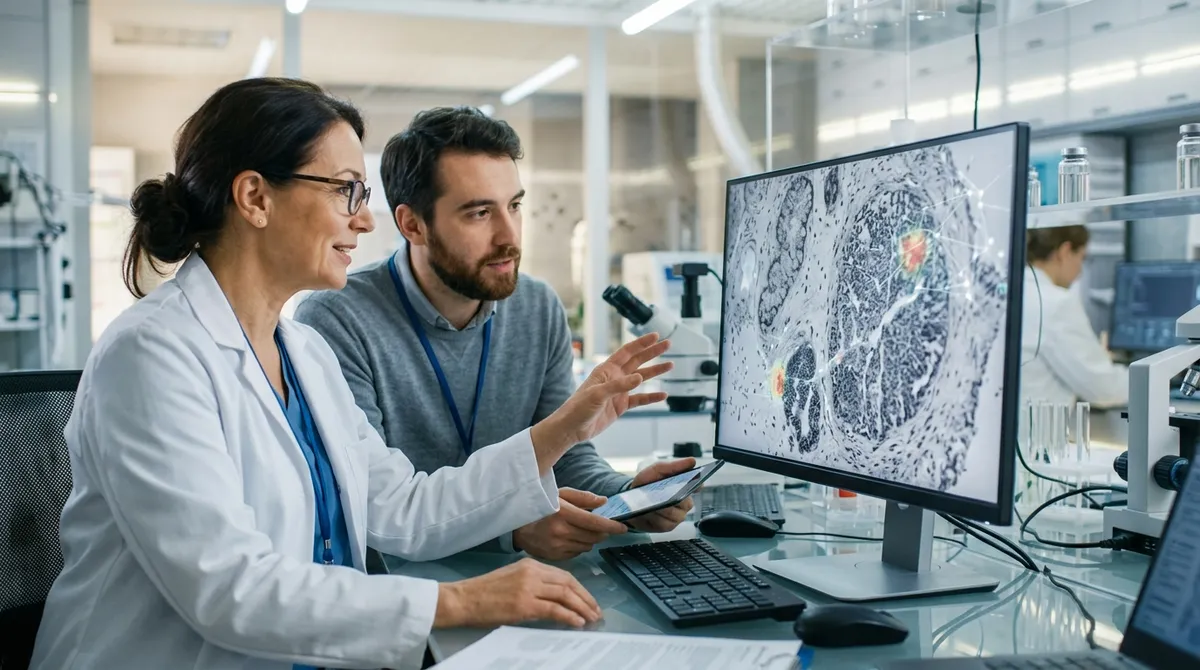
Recent advances in artificial intelligence (AI) are paving the way for personalized cancer care, especially for patients with locally advanced rectal cancer. Researchers at University College London (UCL) have utilized AI to find that certain patients can significantly benefit from an intensified treatment regimen that combines irinotecan with standard chemoradiotherapy. This innovation not only promises to improve survival rates but also illustrates how AI can help in making precise treatment decisions, ultimately enhancing patient care.
Understanding Locally Advanced Rectal Cancer Treatments
Locally advanced rectal cancer is a complex condition often requiring a multifaceted treatment approach combining surgery, chemotherapy, and radiotherapy. Traditional treatment methods have followed a one-size-fits-all strategy, which can sometimes expose patients to unnecessary side effects without guaranteeing improved outcomes. As medical professionals seek more personalized strategies, identifying which patients will benefit from aggressive treatment becomes crucial.
How AI Identified Effective Treatment Combinations
The UCL study harnessed AI's capability to analyze data sets that include tumor characteristics, patient demographics, and treatment outcomes. The researchers aimed to pinpoint which patients would reap the greatest benefit from adding irinotecan to the standard treatment regimen. The analysis revealed that patients exhibiting high tumor cell density experienced significantly lower risks of cancer recurrence and mortality with this intensified treatment. Conversely, patients with low-density tumors did not receive similar benefits, indicating a clear divide in responsiveness to the added chemotherapy.
The Importance of Tumor Cell Density
Why focus on tumor cell density? This characteristic emerged as a critical factor in determining the success of intensified treatment. By segregating patients based on their tumor cell density, healthcare providers can better allocate resources and tailor treatment plans effectively. This not only improves patient outcomes but also reduces the risk of exposing low-density patients to potentially harsh side effects that provide little to no benefit.
AI: An Ally, Not a Replacement
There is a common misconception that AI technologies will replace healthcare professionals. In reality, the goal is to use AI as a powerful tool to augment doctors' decision-making capabilities. As oncology shifts towards a more personalized approach, the focus should remain on how AI can refine treatment protocols and better align therapies with individual patient needs. The insights gained from AI analysis underscore the importance of collaborative decision-making between patients and their healthcare teams.
Balancing Treatment Benefits with Side Effects
As oncologists begin to incorporate AI findings into their treatment regimens, the challenge will also involve balancing the potential survival gains with the side effects that arise from intensified chemotherapy. While the study points to significant benefits for high tumor density patients, the risk of intense side effects cannot be overlooked. Tailoring treatments based on patient-specific data will not only enhance the efficacy of the therapies but also aim to minimize adverse outcomes.
Conclusion
The recent findings from UCL's study illustrate the promising future of AI in healthcare, especially in oncology. By harnessing AI to analyze critical factors like tumor cell density, oncologists can create more personalized treatment plans that significantly enhance patient outcomes. This approach not only has the potential to extend survival rates but also strives to improve overall quality of life by reducing unnecessary exposure to harsh treatments for those who are unlikely to benefit. As the landscape of cancer treatment continues to evolve, the integration of AI represents a significant leap forward in personalized medicine, enhancing the way we approach complex diseases like locally advanced rectal cancer.