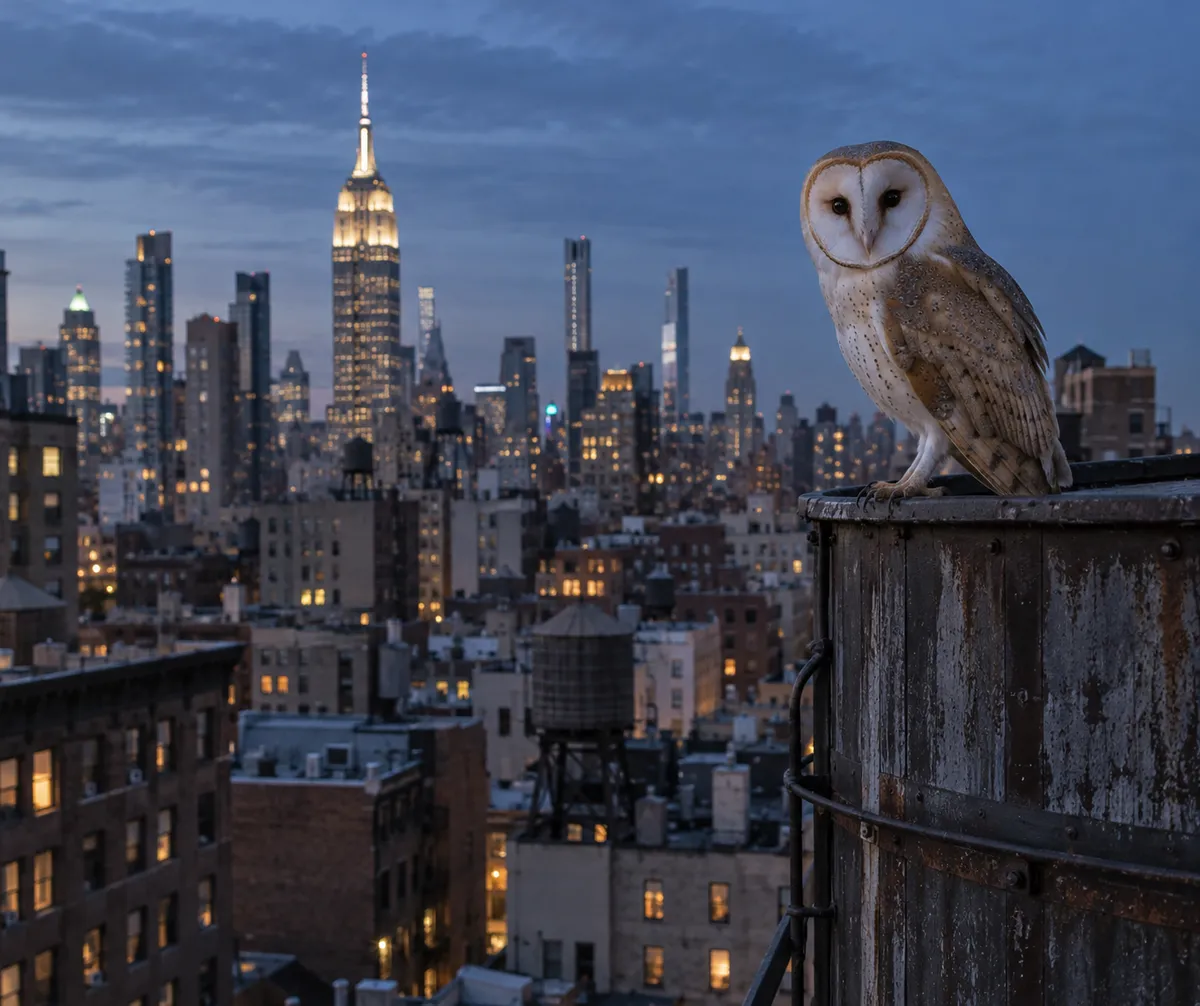
A family of barn owls has nested in a water tower on Manhattan's Upper West Side, and New Yorkers are showing up at dusk to watch. Per HuffPost, one expert says it may be the first documented instance of barn owls nesting in Manhattan in modern history. Here is what's known so far, and how you can turn a story like this into a simple, low-cost wellness habit wherever you live.
What's happening on the Upper West Side
According to HuffPost's reporting, the owls have drawn nightly crowds, excited birders, and curious residents. The nest sits in a water tower above the streets, a spot most passersby would never think to look.
Barn owls are rare in New York City, and HuffPost notes their population has declined over time. That is why an expert's description of this as a possible first for modern Manhattan has made the sighting such a talking point.
The coverage also mentions the sounds. Barn owls make eerie screeches, and according to the report, some residents have mistaken the nighttime noises for screams. If you hear something startling after dark in a city with owls, a bird is one possible explanation.
Why a city owl story resonates
New Yorkers have rallied around urban birds before. HuffPost points to Flaco and Pale Male as earlier examples of wild animals that captured the public's attention. The owl family fits into that larger fascination with wildlife thriving in dense city spaces.
It is our take, not a finding from the report, but stories like this seem to work because they ask very little of you. You don't need gear, a trip, or expertise. You just need to look up at the right time.
Turning wildlife watching into a wellness habit
The report is about owls, not health, so treat what follows as practical suggestions rather than claims from the story.
Pick a regular time
The Upper West Side crowds gather at dusk. Choosing a consistent window, such as the same evening each week, makes it a routine rather than a one-off.
Go with other people
The nightly gatherings show how a shared curiosity can bring neighbors together. Invite a friend or join a local birding group.
Keep your distance
Nesting animals are sensitive to disturbance. Watch from the public sidewalk or park, keep voices low, and avoid shining lights at birds. Binoculars let you see more without getting closer.
Notice sounds as well as sights
Owl calls are part of the experience. Spending a few quiet minutes listening is a simple way to slow down after a busy day.
The conservation side
The decline in barn owl numbers noted by HuffPost is a reminder that a charming sighting sits alongside real concerns. Habitat loss and rodenticide risks are the issues highlighted in connection with these birds. If you want to help wildlife near you, consider these steps:
- Ask your building or property manager about pest control methods that avoid poison.
- Support local conservation and birding organizations.
- Share sightings responsibly, without publicizing exact nest details in ways that could draw harmful crowds.
Starting small
You don't need a rare owl to begin. Step outside at dusk this week, look up at the rooftops and water towers around you, and listen. The Upper West Side shows that wild neighbors may be closer than you think.