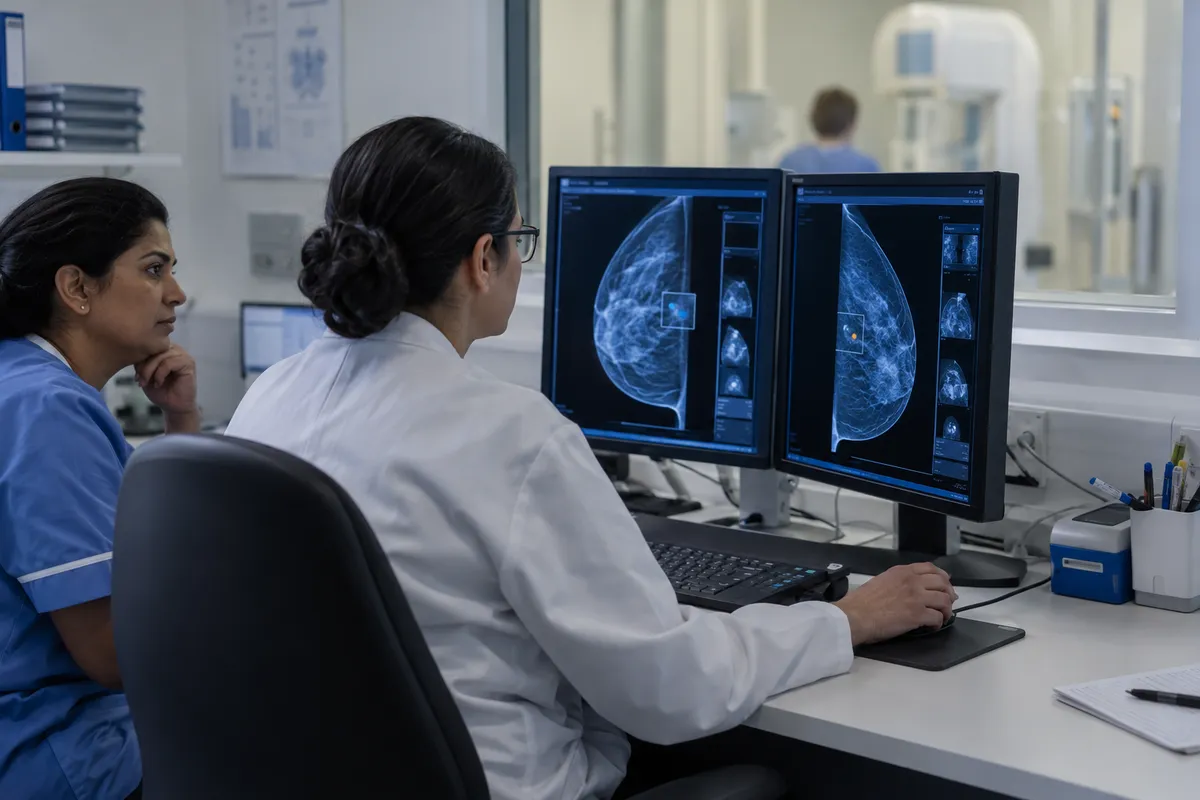
The NHS has launched what the BBC describes as the world's largest trial of artificial intelligence in breast cancer screening. The study, called EDITH, will test whether AI can help read screening mammograms, spot cancer earlier, and ease the workload on radiologists. If you attend breast screening, or care about how the technology could shape it, here is what the trial is really asking, and what it is not.
What the EDITH trial is testing
Per the BBC, researchers will test AI in breast screening with three linked aims: reading mammograms, detecting cancer earlier, and reducing pressure on NHS services. It is a trial, which means the technology is being evaluated, not simply rolled out. The point is to find out whether it works safely at scale before anyone decides how widely to use it.
The best way to think about it: a second reader, not a replacement
The most useful framing for patients is AI as a support tool. In screening, mammograms are examined by trained specialists, and the trial is about whether AI can assist that process. Nothing in the reporting suggests doctors are being taken out of the loop. What the trial is designed to answer is whether a human-plus-AI approach performs well and saves time.
That distinction matters for your peace of mind. Handing a scan to software alone is a very different proposition from having software flag details for a clinician to weigh. The first raises hard questions about accountability. The second looks more like a safety net.
Why the NHS is interested now
Breast cancer is the most common cancer among women in the UK, according to the coverage. At the same time, radiology services face rising demand and staff shortages. Screening produces a large volume of images that need expert eyes, and there are only so many experts.
If AI can safely take on part of that load, specialists could spend more time on complex cases. That is the hope behind the trial. Whether it holds up is exactly what the study is meant to establish.
The promise: earlier detection
Catching cancer earlier is the headline benefit researchers are chasing. In breast cancer, earlier detection generally gives more treatment options, and screening exists for precisely that reason. The trial will examine whether AI can help find cancers sooner than current approaches.
The risk: more false alarms and overdiagnosis
Faster and more sensitive is not automatically better. The reporting emphasizes the balance between earlier diagnosis and two downsides:
- Unnecessary recalls: being called back for more tests when nothing is wrong, which can be stressful.
- Overdiagnosis: finding cancers that would never have caused harm in a person's lifetime, which can lead to treatment that was not needed.
A tool that spots more abnormalities could, in principle, push both numbers up. A good result from this trial is not just more cancers found. It is more cancers found without a pile of extra anxiety and unneeded treatment. That is my read of why the trial's size matters: these trade-offs only show up clearly across very large numbers of women.
What you can do as a patient
The report details I have do not cover how women are selected or invited, so I will not guess at that. Practical steps that hold regardless:
- Keep attending screening when invited. Screening is the established route to early detection, and the trial does not change that.
- If you are asked to take part, ask how AI will be used. Sensible questions: Will a clinician still review my mammogram? What happens if the AI and the clinician disagree?
- Ask about recalls. If you are called back, ask what prompted it. A recall is not a diagnosis.
- Check official NHS information for details on participation rather than relying on social media summaries.
What to watch for in the results
When results eventually emerge, look past the headline. The useful questions are whether cancers were found earlier, whether recall rates stayed reasonable, whether overdiagnosis was kept in check, and whether radiologist workload truly dropped. A trial that improves one measure while worsening another tells a more complicated story than "AI beats humans."
The bottom line
AI in breast screening is being tested, not adopted wholesale, and it is being tested as help for clinicians rather than a substitute. Keep your screening appointments, and if you are ever offered a place in the trial, ask how your mammogram will be read and by whom.