
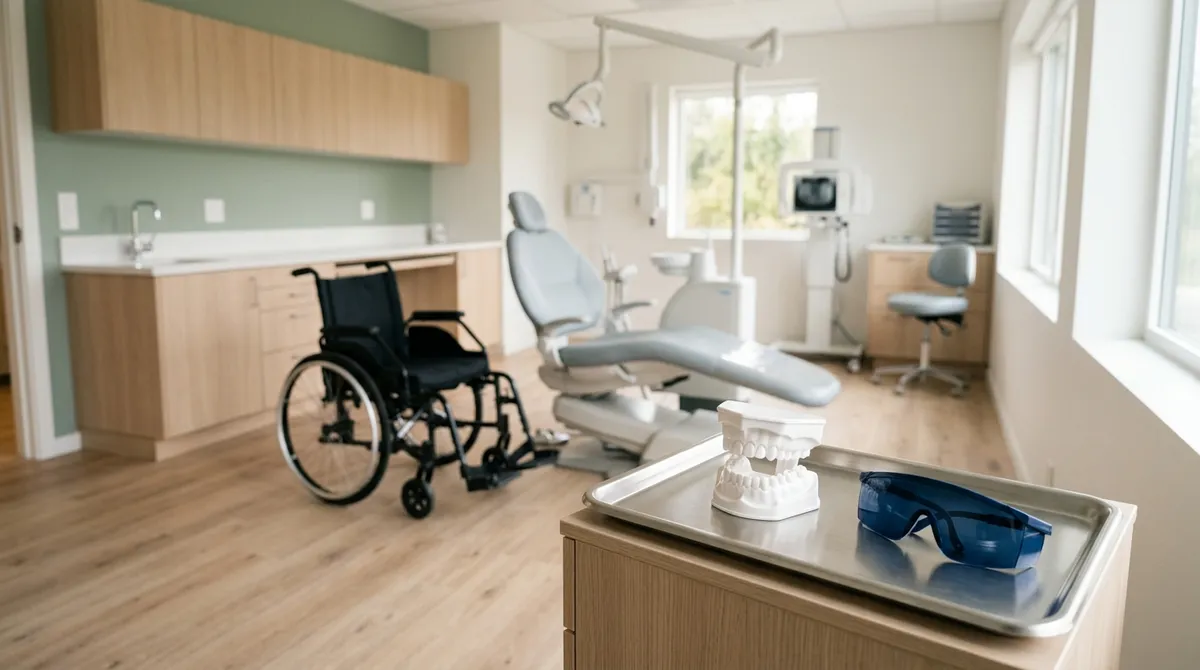
Barriers to Dental Care Persist for Disabled Communities
People with disabilities continue to face substantial obstacles when seeking oral health care, according to new Finnish doctoral research that examined perspectives from patients, caregivers, and healthcare professionals. The study reveals a concerning pattern of inaccessible facilities, inadequately trained professionals, and persistent stigma that undermines dental care quality for disabled populations.
Professional Training Emerges as Critical Solution
The research identifies professional training and exposure to disability care as potentially transformative interventions. According to the findings, healthcare providers who receive specialized training demonstrate improved confidence when treating patients with disabilities, leading to better patient outcomes overall.
This connection between training and care quality suggests that current dental education programs may be falling short in preparing practitioners to serve diverse patient populations effectively.
Systemic Issues Demand Attention
The study highlights three primary barriers that disabled individuals encounter in dental settings:
Physical Accessibility: Many dental facilities lack proper accommodations, making it difficult or impossible for people with mobility impairments to receive care.
Provider Preparedness: Healthcare professionals often lack adequate training in disability-specific care approaches, leading to substandard treatment experiences.
Attitudinal Barriers: Stigma and discrimination continue to affect patient-provider interactions, creating additional stress for disabled individuals seeking care.
Public Health Implications
Oral health equity for disabled populations represents a neglected area of public health concern, according to the research. As healthcare systems increasingly prioritize reducing health disparities, these findings provide concrete evidence for policy and training reforms.
The study's timing aligns with growing recognition that healthcare access issues disproportionately affect vulnerable populations, including people with disabilities who already face multiple systemic barriers.
Training as Scalable Intervention
The research positions professional training as a practical, scalable solution that could benefit entire healthcare systems. Unlike infrastructure changes that require significant capital investment, training programs can be implemented relatively quickly and cost-effectively.
The study suggests that exposure to disability care during professional education helps healthcare providers develop both technical skills and crucial soft skills like empathy and communication. These interpersonal abilities directly impact treatment outcomes for disabled patients.
Broader Healthcare Context
The findings contribute to a growing body of evidence highlighting healthcare disparities faced by disabled communities. While previous research has documented access issues across various medical specialties, this study specifically addresses oral health—an area often overlooked in disability advocacy and policy discussions.
Oral health problems can significantly impact overall health and quality of life, making accessible dental care particularly important for disabled individuals who may already manage complex health conditions.
Moving Forward
The research provides actionable insights for multiple stakeholders in the healthcare system. Dental schools could incorporate disability awareness and special care dentistry into their curricula, while healthcare institutions could implement training programs for existing staff.
Policy makers also have opportunities to address these disparities through training mandates and accessibility requirements for healthcare facilities.
As health systems continue evolving toward more inclusive care models, this research offers evidence-based guidance for creating meaningful improvements in oral health access and quality for disabled populations.